

Here, we bust five common myths and provide factual explanations to enhance your comprehension of cash flow and debt management. A positive cash flow indicates that the company generates more cash than it spends, which is a sign of good financial health. Operating cash flow can be evaluated by adding depreciation to income before interest and taxes, minus the taxes. Now, the Cash Flow to Creditors formula exhibits the amount generated from periodic profits, then adjusted for depreciation (which is a non-cash expense) and taxes (that build cash bookkeeping outflow).
Cash Flow to Creditors: Importance in Financial Decision- Making

When applying the cash flow to creditors formula, one common variation involves adjusting for non-cash items. Imagine you’re running a lemonade stand; most of your expenses are related to lemons, sugar, and cups—cash transactions. However, if someone gives you free lemons as a promotion, that’s a non-cash item in your business operations but doesn’t affect your actual cash flow.
Cash Flows to Creditors Formula
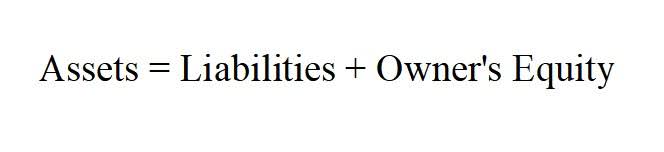
These expenses do not involve the actual outflow of cash but still impact the overall profitability of Liability Accounts the business. To get an accurate measure of cash flow from operating activities, you need to adjust for these non-cash expenses by adding them back to net income. It ensures that the company has enough cash to meet its operational needs, invest in growth opportunities, and service its debt obligations. They reflect the price paid for using creditors’ funds and are a crucial part of calculating cash flow to creditors.
How to calculate pr interval
Industries with longer credit terms or higher trade payables may experience fluctuations in their cash flows as well. You can easily understand the concept of cash flow to creditors by imagining yourself as a financial detective, carefully tracing the trail of money flowing from your pocket to those you owe. By examining this metric, analysts can gauge a company’s creditworthiness and evaluate its financial health. Managing cash flow is a critical aspect of running any business, especially when it comes to handling debts and financial obligations. For businesses that have long-term debts, it’s essential to understand the movement of cash that flows to creditors.
- This calculation allows you to analyze the amount of cash that is being paid out to lenders and suppliers, giving you valuable insights into your financial obligations.
- Understanding the importance of cash flow to creditors is crucial in financial analysis.
- You can easily understand the concept of cash flow to creditors by imagining yourself as a financial detective, carefully tracing the trail of money flowing from your pocket to those you owe.
- Factors impacting cash flow to creditors include interest rates, payment terms, and borrowing costs.
- This means that after paying off $5,000 in interest, the company reduced its long-term debt by $5,000, resulting in a net cash flow of $10,000 directed towards creditors.
- This article will provide a step-by-step guide to help you calculate cash flow to creditors efficiently.
- Enter the total interest paid, ending long-term debt, and beginning long-term debt into the calculator to determine the cash flow to creditors.
- For any company, maintaining a positive cash flow, managing debt effectively, and ensuring timely debt repayments are key to achieving long-term financial success.
- Deduct the dividends paid to shareholders from the company’s available cash, painting a clearer picture of how much free cash flow remains after satisfying shareholder expectations.
Essentially, you’re looking at net cash provided by operating activities and subtracting capital expenditures (CapEx) and changes in working capital. This process filters out non-cash items like depreciation, offering a clearer picture of the company’s operational efficiency. In essence, it paints a more accurate financial landscape by focusing on actual cash movements rather than just profit figures. Understanding these components helps in gauging not just how much interest you’re paying but also how effective your debt management strategies are. Cash Flow to Creditors (CFC), is a very imperative metric that helps financial analysts and investors analyze a company’s financial health and its direct ability to tackle its debt.

Importance of Calculating Cash Flow to Creditors
- This process helps determine how much cash is being paid out to the creditors of the company, providing insight into the company’s financial health and its ability to meet debt obligations.
- It signifies the company’s efforts in reducing its debt obligations, contributing to a positive cash flow scenario.
- Higher interest rates can increase the amount owed, while longer payment terms can delay cash inflows.
- Many companies mistakenly assume they can easily borrow money to cover cash flow shortfalls without fully considering the long-term impact on financial stability.
- Additionally, gains or losses from asset sales or investments should also be taken into account when calculating cash flow from operating activities.
- Now let’s move on to understanding how dividends paid to shareholders impact overall cash flow.
To better comprehend the significance of cash flow to creditors, it is essential to compare it with the cash flow to debtors. While both measures provide insights into a company’s financial position, they focus on different aspects. This process helps determine how much cash is being paid out to the creditors of the company, providing insight into the company’s financial health and its ability to meet debt obligations.

Calculation Formula
We plan to cover the PreK-12 and Higher Education EdTech sectors and provide our readers with the latest news and opinion on the subject. From time to time, I will invite other voices to weigh in on important issues in EdTech. We hope to provide a well-rounded, multi-faceted look at the past, present, the future of EdTech in the US and internationally.
What’s your company’s financial health like?
This could usually be seen in the form of interest paid or cash flow to creditors formula full/partial payment of the principal amount. Once you have made these adjustments to net income, you will have calculated the cash flow from operating activities. Now you can transition into determining cash flow from financing activities without skipping a beat. It’s essential to regularly monitor key financial metrics, including cash flow, debt levels, and your overall capital structure.